 Plausible integration
Build Plausible dashboards for traffic, goals, referrers, and content reporting
Connect Plausible-style analytics data to Chartbrew and report on visitors, pageviews, sources, campaigns, goals, countries, devices, and privacy-friendly web analytics KPIs.
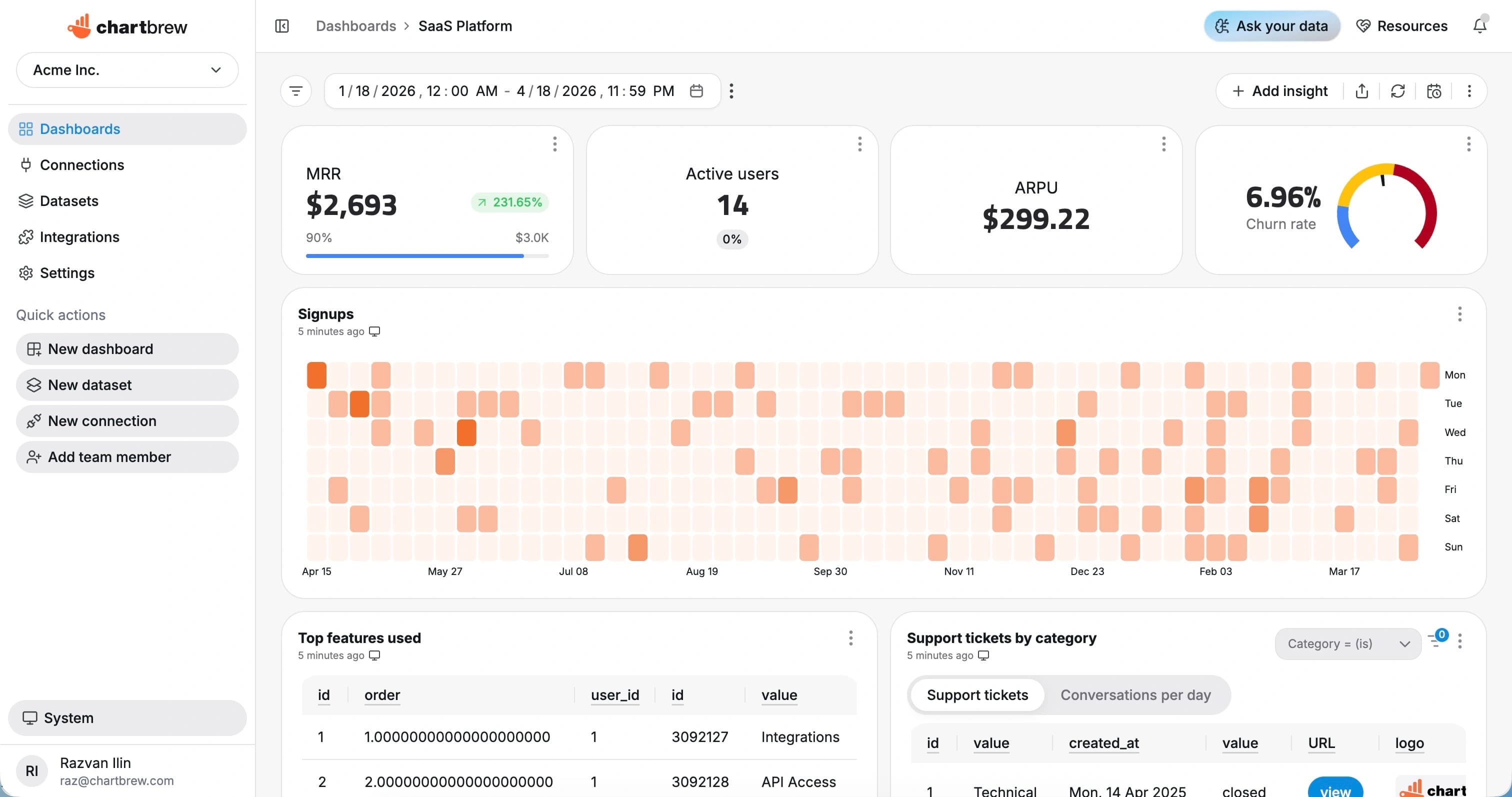
What You Can Track
Plausible metrics for lean web analytics reporting
Use Chartbrew to create shareable traffic and conversion dashboards across sites, clients, campaigns, and content.
Visitors and pageviews
Track visitors, visits, pageviews, bounce rate, and visit duration over time.
Top pages
Rank pages, landing pages, and content sections by traffic and engagement.
Referrers and sources
Break down traffic by referrer, source, UTM campaign, and acquisition path.
Goals and conversions
Report on goal completions, conversion rates, and campaign outcomes.
Geography and devices
Segment visitors by country, device, browser, and operating system.
Client reporting
Share analytics dashboards with stakeholders without giving everyone analytics account access.
How It Works
From Plausible connection to live dashboard
The Plausible workflow is built around a source connection, reusable datasets, scheduled refreshes, and shareable dashboards.
Connect Plausible
Add API access for the Plausible site or analytics endpoint you want to report on.
Choose the reporting scope
Choose the site, metrics, dimensions, filters, goals, campaigns, and date ranges for the dashboard.
Create datasets
Turn the response fields you need into KPI, chart, and table datasets with filters and date ranges.
Share live reporting
Publish dashboards, embed reports, or send scheduled snapshots so reporting stays repeatable.
Why Chartbrew for Plausible
Privacy-friendly analytics reporting inside a broader dashboard
Chartbrew lets Plausible traffic metrics sit beside product, revenue, CRM, and database metrics for fuller reporting.
Traffic dashboards
Build dashboards for visitors, pageviews, sources, pages, goals, devices, and countries.
Marketing context
Place web analytics next to Stripe, Customer.io, Airtable, API, or database data.
Scheduled reports
Refresh analytics dashboards and send client or leadership snapshots on a schedule.
Reusable filters
Reuse dashboards across sites, campaigns, countries, devices, and reporting periods.
AI-assisted ideas
Use Chartbrew AI to plan analytics datasets and questions for traffic reporting.
Embedded dashboards
Embed analytics reports into client portals, internal tools, and shared reporting hubs.
Setup Requirements
What you need before connecting Plausible
Start with the right Plausible access, a clear reporting scope, and a few fields that map to useful dashboard metrics.
A Plausible site or analytics API access for the properties you want to report on
Site ID or domain context for the dashboard
Metrics and dimensions such as visitors, pageviews, sources, pages, goals, and countries
Date range and filters for reporting periods
Optional campaign, client, site, or content grouping rules
| Dataset idea | What it can power |
|---|---|
| Visitors over time | Visitors, visits, or pageviews grouped by day, week, or month |
| Top pages | Pages ranked by visitors, pageviews, or engagement |
| Traffic sources | Referrers and UTM sources grouped by traffic volume |
| Goal conversions | Goal completions and conversion rate over time |
| Country report | Visitors grouped by country or region |
| Device breakdown | Traffic grouped by device, browser, or OS |
| Campaign report | Visitors and goals grouped by campaign parameters |
| Client summary | Site-level KPIs for recurring client reporting |
Related Features
Features that make Plausible reporting useful
Use Plausible dashboards with Chartbrew automation, AI workflows, sharing, embeds, filters, and reporting tools.
Report builder
Build web analytics reports with KPI cards, trend charts, tables, filters, and reusable layouts.
Chartbrew AI
Ask for traffic, conversion, referrer, event, and campaign dashboard ideas in plain language.
Data update schedules
Refresh analytics dashboards automatically so weekly and monthly reporting does not depend on exports.
Dashboard snapshots
Send scheduled analytics snapshots to clients, marketing teams, and leadership reviews.
Filter variables
Reuse analytics dashboards across sites, channels, countries, campaigns, and reporting periods.
Embedded reports
Embed traffic and conversion dashboards in client portals or internal marketing workspaces.
Related Integrations
Connect Plausible with the rest of your reporting stack
Blend Plausible metrics with product, customer, revenue, analytics, project, and operational data from other Chartbrew sources.
FAQ
Plausible integration questions
Practical details about using Plausible data in Chartbrew dashboards.
Build your Plausible dashboard
Turn privacy-friendly analytics into shareable reporting
Connect analytics data, build reusable traffic and goal datasets, and share dashboards with clients or internal teams.
