 Supabase integration
Build Supabase dashboards for Postgres data, users, revenue, and product activity
Connect Supabase Postgres to Chartbrew and turn SQL queries, tables, joins, auth users, app events, orders, subscriptions, and operational records into live dashboards.
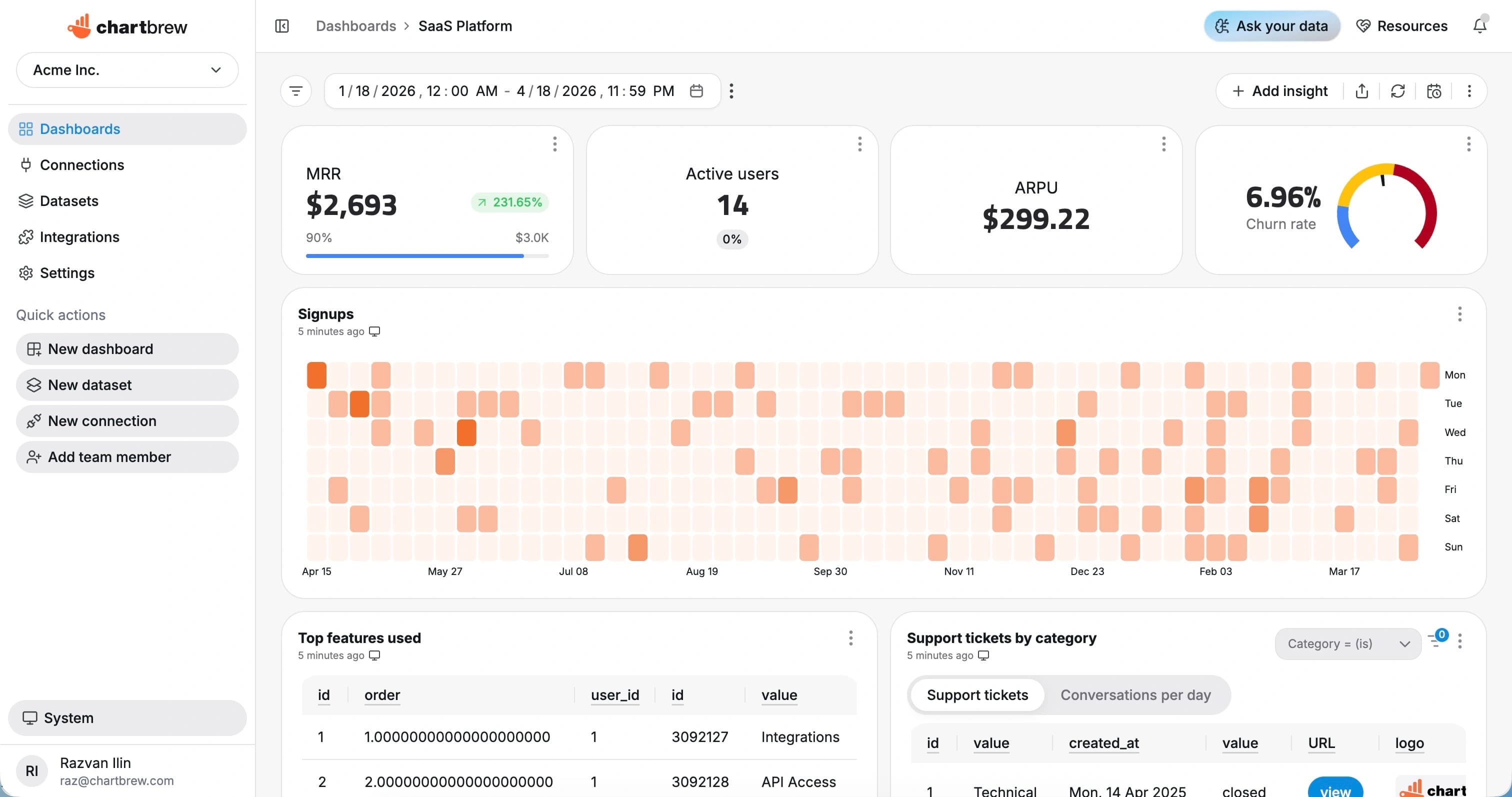
What You Can Track
Supabase metrics for app, product, and database reporting
Use Chartbrew as a reporting layer on top of Supabase Postgres for product teams, SaaS teams, client portals, and internal operations.
User and auth metrics
Track new users, active accounts, signups, teams, and auth-related records over time.
Revenue and orders
Report on orders, invoices, payments, subscription records, and customer value.
Product events
Visualize events, audit logs, feature usage, and engagement records stored in Supabase.
Operational workflows
Track tasks, tickets, jobs, applications, bookings, or customer records by status.
SQL summaries
Create KPIs from joins, filters, counts, sums, averages, and calculated SQL fields.
Tenant filters
Reuse one dashboard across customers, teams, workspaces, regions, and plans.
How It Works
From Supabase connection to live dashboard
The Supabase workflow is built around a source connection, reusable datasets, scheduled refreshes, and shareable dashboards.
Connect Supabase
Add your Supabase Postgres host, database, user, password, port, and SSL settings in Chartbrew.
Inspect tables and fields
Use your schema, tables, columns, and joins to decide which reporting datasets should power the dashboard.
Build reusable datasets
Write queries for KPIs, trends, breakdowns, and tables that can be reused across dashboards and clients.
Share live reporting
Publish dashboards, embed charts, and send scheduled snapshots to keep stakeholders aligned.
Why Chartbrew for Supabase
Live dashboards on top of Supabase Postgres
Chartbrew helps Supabase teams create reusable SQL dashboards, AI-assisted datasets, snapshots, embeds, and cross-source reporting.
Native Supabase connection
Use Chartbrew as a reporting layer on top of Supabase without exporting tables into a separate spreadsheet workflow.
Schema-aware reporting
Build datasets from tables, fields, joins, and query results so charts stay grounded in the structure of your data.
AI-assisted queries
Use Chartbrew AI to draft dataset ideas and query starting points when you want to move faster from schema to chart.
Scheduled refreshes
Keep dashboards up to date with automatic refresh schedules for daily, weekly, monthly, or operational reporting.
Secure sharing
Share dashboards, embedded reports, and snapshots without giving every stakeholder direct database access.
Multiple sources together
Place database metrics beside API, analytics, product, customer, payment, and project management data.
Setup Requirements
What you need before connecting Supabase
Start with the right Supabase access, a clear reporting scope, and a few fields that map to useful dashboard metrics.
A Supabase project with Postgres access enabled
Database host, port, database name, user, password, and SSL settings
A read-only database user or reporting role
Known tables, views, joins, or reporting questions for the first dashboard
Date, status, user, account, numeric, or category fields for useful charts
| Dataset idea | What it can power |
|---|---|
| New users | Auth users or account records grouped by day, week, or month |
| Active accounts | Accounts with recent app, event, or transaction activity |
| Revenue trend | Orders, invoices, payments, or subscription records over time |
| Workflow status | Tasks, jobs, tickets, or records grouped by status |
| Feature adoption | Events grouped by feature, plan, user, or workspace |
| Top customers | Customers ranked by revenue, usage, or activity |
| Failed jobs | Stale, failed, pending, or overdue records |
| Tenant summary | KPIs filtered by organization, workspace, account, or project |
Setup Guide
Follow the Supabase database guide
Use the walkthrough to connect Supabase Postgres, create SQL datasets, and build your first Chartbrew dashboard.
Related Features
Features that make Supabase reporting useful
Use Supabase dashboards with Chartbrew automation, AI workflows, sharing, embeds, filters, and reporting tools.
SQL query builder
Write, test, and reuse SQL datasets for operational charts, tables, filters, and dashboard sections.
AI SQL assistant
Ask Chartbrew to draft SQL queries and chart ideas from your schema when you need a faster starting point.
Data update schedules
Refresh database dashboards automatically so recurring reports stay current without manual exports.
Dashboard snapshots
Send scheduled dashboard snapshots to clients, operators, founders, and internal reporting channels.
Filter variables
Reuse one dashboard across customers, regions, products, statuses, date ranges, and team-specific views.
Embedded reports
Embed live database dashboards into portals, admin panels, client workspaces, or internal tools.
Related Integrations
Connect Supabase with the rest of your reporting stack
Blend Supabase metrics with product, customer, revenue, analytics, project, and operational data from other Chartbrew sources.
FAQ
Supabase integration questions
Practical details about using Supabase data in Chartbrew dashboards.
Build your Supabase dashboard
Turn Supabase Postgres data into live product reporting
Connect Supabase, write reusable SQL datasets, and share app, revenue, customer, and operational dashboards.
